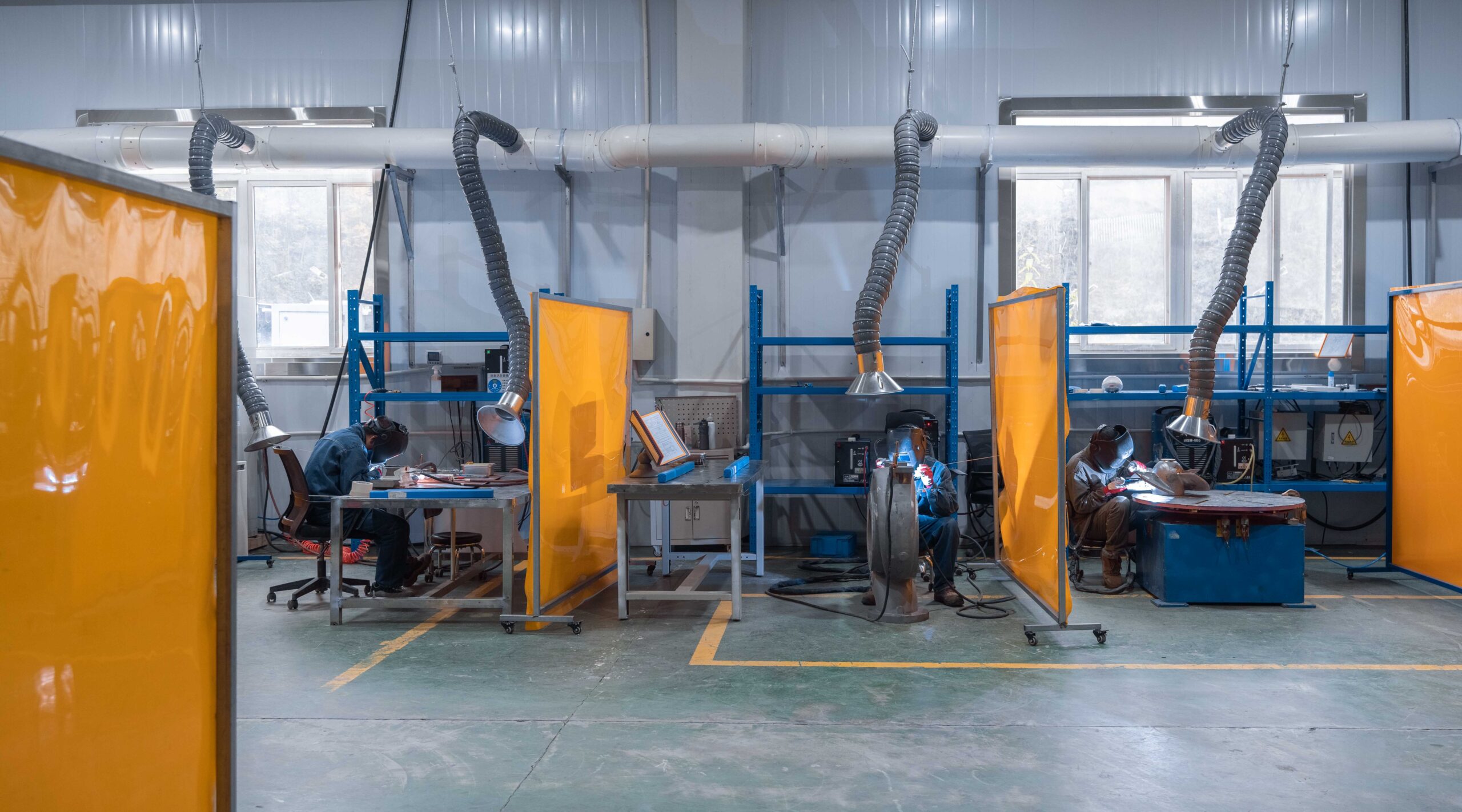
Welding
Welding of Titanium and Zirconium: An Overview and Qualifications
1.Introduction to Titanium and Zirconium Welding
Titanium and zirconium are two metals with exceptional properties, widely used in aerospace, marine engineering, chemical industries, and medical devices. Their high strength-to-weight ratio, corrosion resistance, and biocompatibility make titanium and zirconium alloys essential in modern manufacturing. Welding these materials is a critical process, requiring specialized techniques and stringent quality control.
Common welding methods for titanium and zirconium include:
- Gas Tungsten Arc Welding(GTAW):This is the most widely used method, suitable for both thin and thick plates. High-purity argon gas(typically over 99.997%)is used to protect the weld zone from oxidation and contamination.
- Vacuum Electron Beam Welding: Used for high-precision and complex structures, especially in the aerospace industry.
- Laser Welding: Characterized by high energy density and rapid cooling, it is ideal for thin plate welding.
2.Welding Process Characteristics
- Protective Gas: Both titanium and zirconium require extremely high-purity protective gases. Zirconium, in particular, demands higher gas purity than titanium.
- Heat Input Control: Careful control of heat input is essential to prevent degradation of material properties due to excessive temperatures.
- Weld Protection: Comprehensive protection of the molten pool and high-temperature areas is necessary to prevent oxidation and contamination.
- Color Inspection: The color of the weld surface is a critical indicator of welding quality. Silver or gold colors indicate good quality, while blue requires removal, and gray indicates poor quality.
3.Welder Qualifications
The qualifications of welding personnel are crucial in titanium and zirconium welding. At ALBA, all welders are required to hold the following certifications:
- ASME IX Certification: Developed by the American Society of Mechanical Engineers (ASME), this standard is widely used for welding in boilers, pressure vessels, and piping.
- ISO 9606 Certification: This international standard, developed by the International Organization for Standardization (ISO), applies to welding of various metals. It ensures welders possess the necessary skills and knowledge to perform welding operations to strict standards.
These certifications ensure that welders possess the necessary skills and knowledge to perform welding operations to strict standards.
4.Welding Procedure Qualification (WPQR)
Welding Procedure Qualification Records (WPQR)are essential for verifying the correctness of welding procedures and the capabilities of welding personnel. ALBA’s welding procedure qualifications are recognized by TÜV Rheinland, ensuring compliance with international standards.
Key components of welding procedure qualification include:
- Pre-Welding Procedure Specification(pWPS):This document outlines welding parameters, protective gases, welding methods, and other critical details.
- Test Piece Welding and Inspection: This involves visual inspection, non-destructive testing(e.g., radiographic and ultrasonic testing),tensile testing, bend testing, and metallographic analysis.
- Qualification Report: Based on test results, the welding procedure is evaluated to ensure it meets relevant standards.
5.Welding Procedure Qualification Standards
ALBA adheres to the following standards for welding procedure qualification:
- ISO 15614-5:Applicable to arc welding of titanium and titanium alloys, zirconium and zirconium alloys.
- GB/T 40801-2021:This Chinese national standard provides detailed guidelines for welding procedure qualification tests of titanium, zirconium and their alloys.
These standards cover all aspects of welding procedures, including welding methods, parameters, protective measures, testing methods and acceptance criteria.
—
Summary
Welding of titanium and zirconium is a critical process in modern industry, requiring strict control of protective gas purity, heat input, and weld protection. Welder qualifications and welding procedure qualifications are key to ensuring welding quality. ALBA ensures that its welding procedures and personnel capabilities meet the highest international standards through ASME IX and ISO 9606 certifications and TÜV Rheinland-recognized Welding Procedure Qualifications (WPQR).
Contact Us
If you have any questions about titanium and zirconium welding or related qualifications, please feel free to contact us. Our expert team is ready to provide professional technical support and services.